Community-supported.
Open Source.
The Editoria11y Accessibility Checker is trusted by more than 40,000 websites to meet authors where they are:
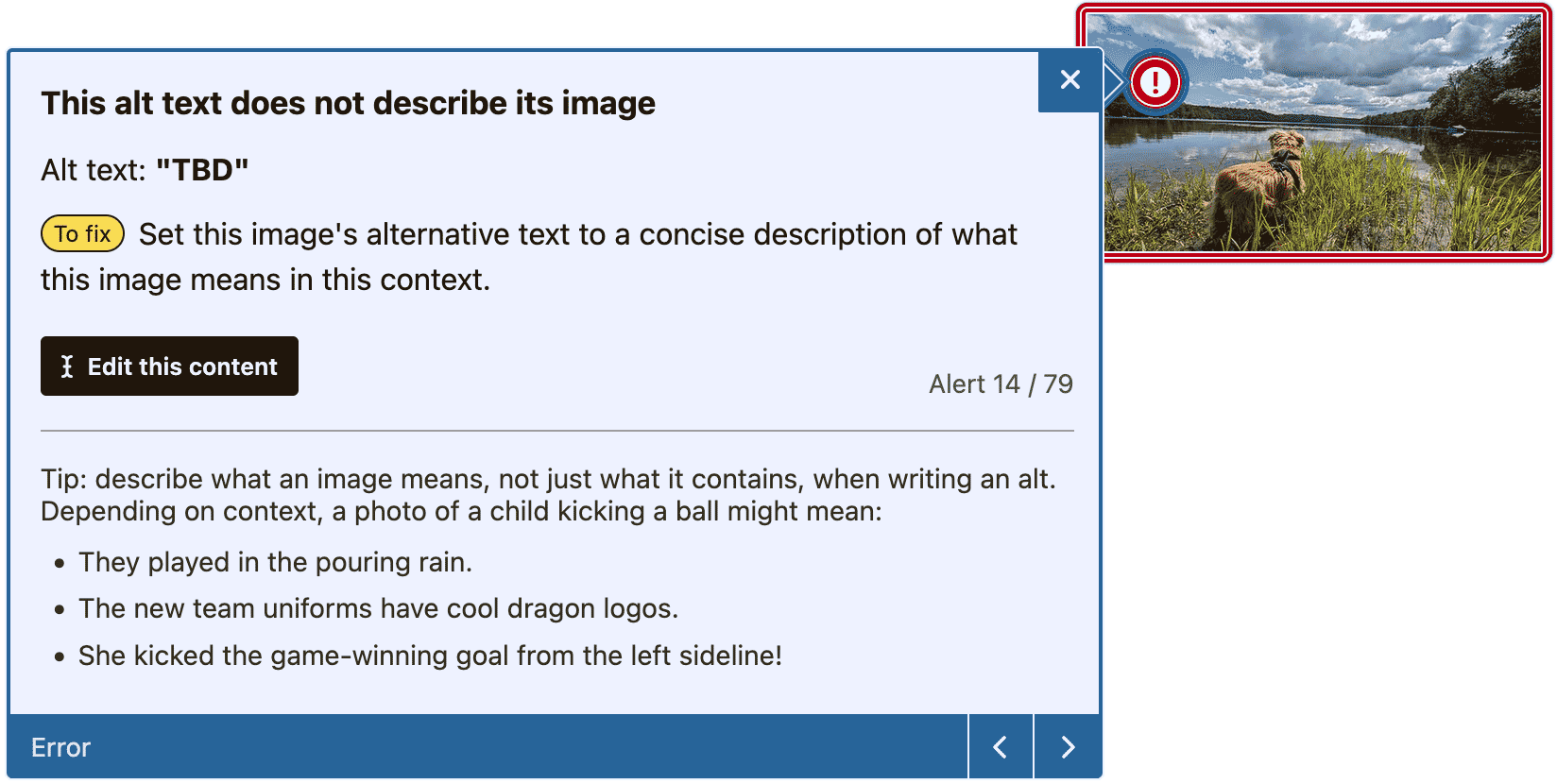
- 90+ tests run in real-time, offering inline corrections and advice as authors type in CKEditor, TinyMCE and Gutenberg.
- Inline corrections "just work." Authors do not need to install a tool, run a test or visit a dashboard.
- Tips use plain language that both correct and teach.
- Results are private. Tests run in-browser, and reports are stored on your own server.
Editoria11y plugins integrate deeply into popular content management systems, allowing for as-you-type checking and site-wide reporting:
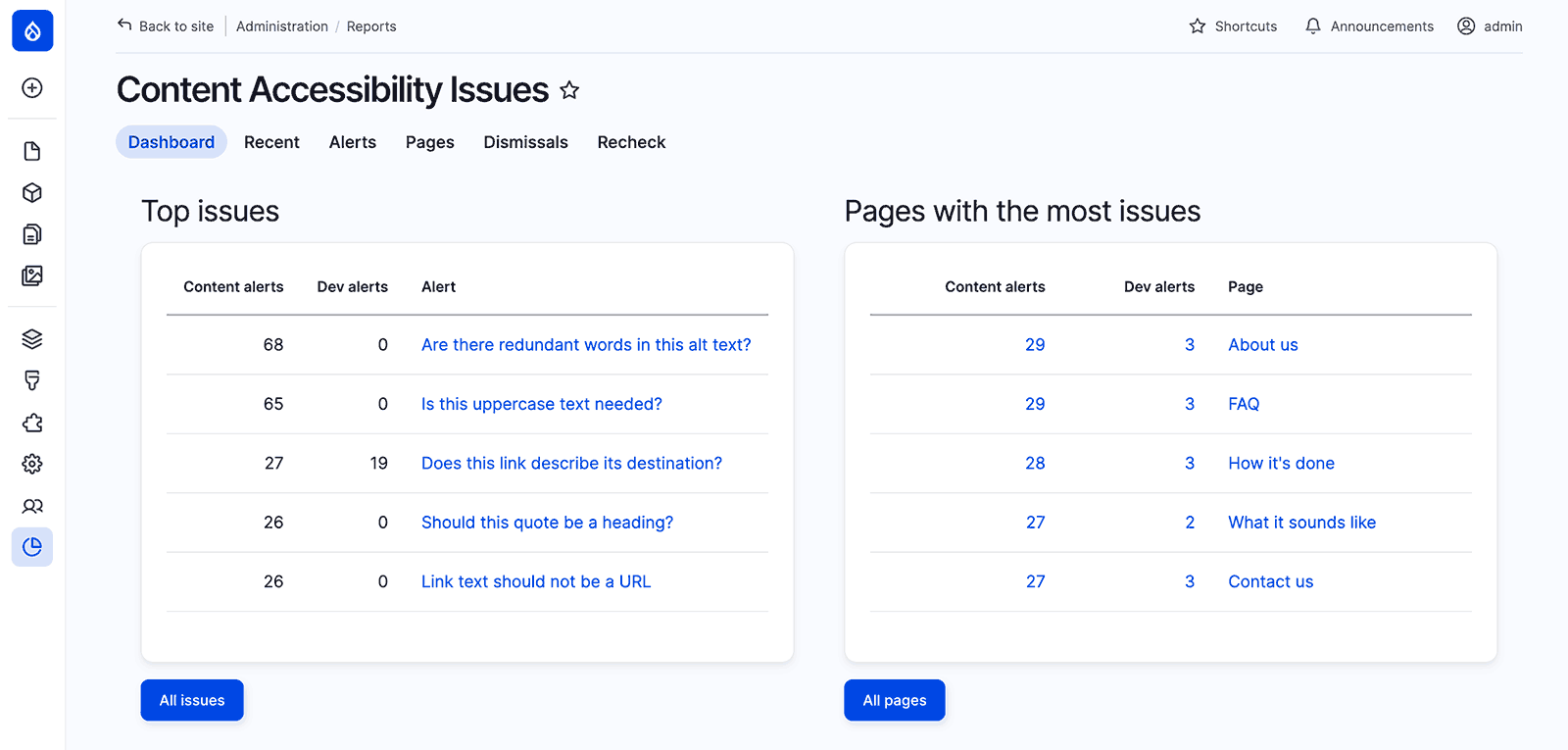
Admin tools make monitoring simple
- Straightforward dashboards allow for browsing and filtering by issue, page and user.
- Results update in real time as authors work.
- Site configuration tools and in-tip dismissal buttons make it easy to hide unhelpful alerts.
Split configurations keep developer tools for... developers.
- Contrast checking, accessible name calculations and page metadata tests run live every time a page refreshes.
- Test-level configuration allows for precise control of who sees each alert.
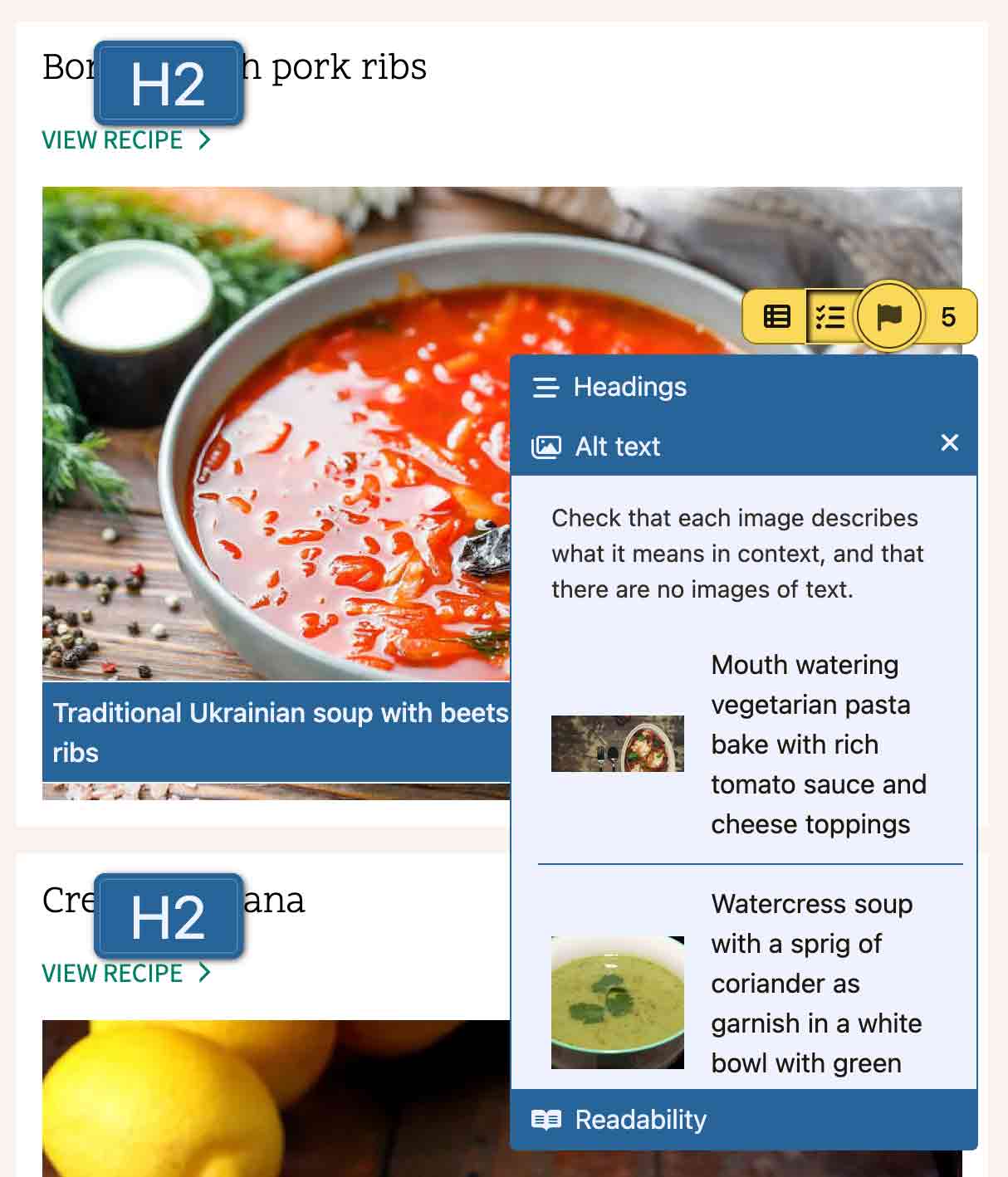
- In-page extras allow for manual reviews of page structure, alt text and readability.
Project members drive development, documentation & support.
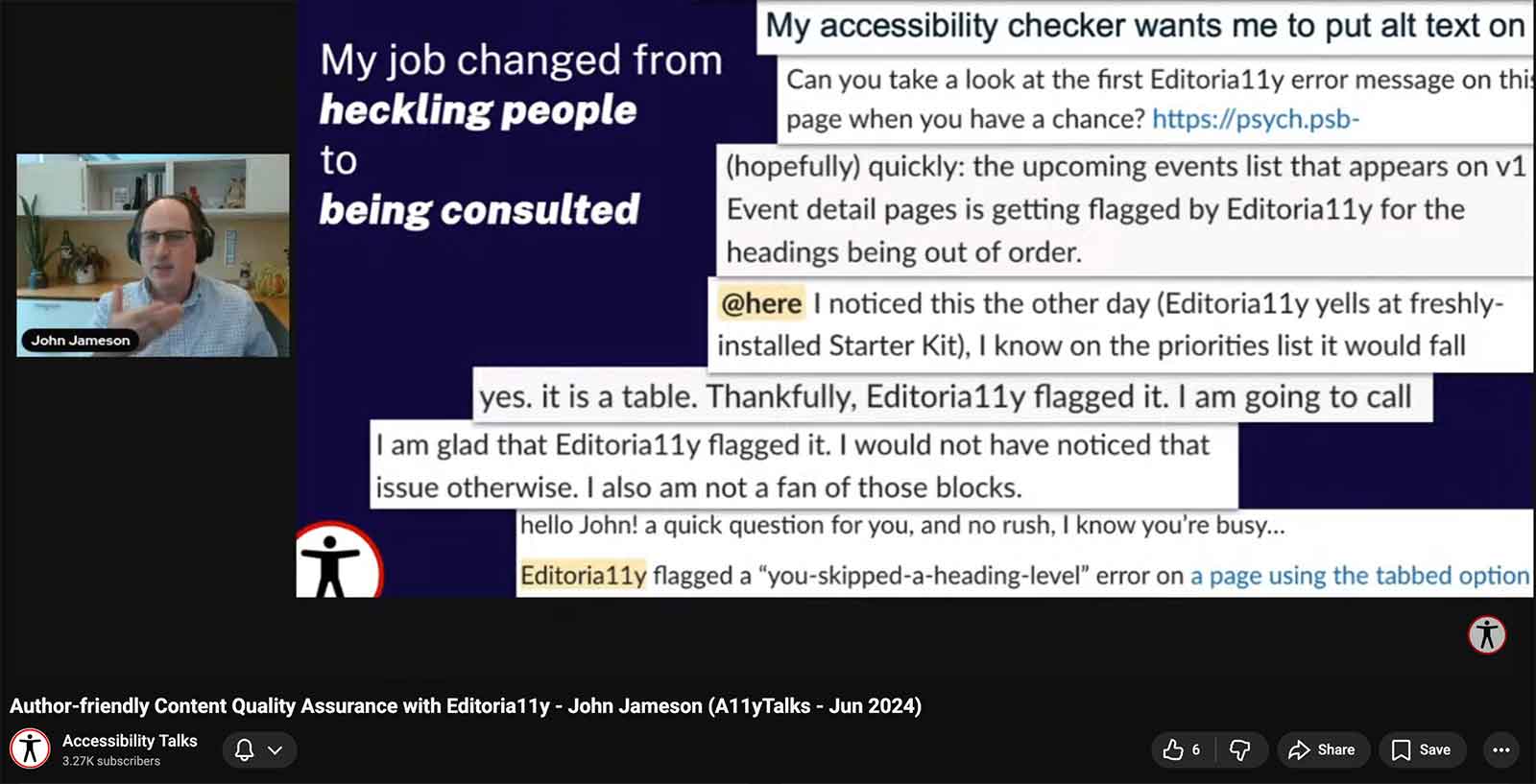
- The community contributes through developer time, sponsored work or add-on subscriptions.
- Discussions guide which feature requests are selected for development.
- Members find support in the forums and issue queues.
We don't overpromise.
Automated tests are quite good at catching predictable mistakes. Editoria11y knows when content authors insert a table without headers or an image with a filename as alt text.
Automated tests are not good at catching "surprises" from inexperienced or AI developers, like a critical button only working with a desktop mouse, or half the content of the page being inside an image of text.
Companies love Editoria11y because it is fantastic for maintaining content quality after manual testing. It does not replace a manual testing, and it does not make promises it cannot keep.